
The Short Version
- Set a predictable visit rhythm early - once a month, every six weeks - so neither of you is guessing.
- Trust builds in three stages: cautious at the start, growing after the first real visit, steady long-term.
- Video dates can't replace a front-porch swing, but they can cover the weeks between visits beautifully.
- Loneliness is normal in long-distance love. Lean on friends, faith, and small daily rituals.
- At some point one of you will likely need to move. Talk about that honestly before year two.
Why Rural Distance Is Its Own Kind of Challenge
Long-distance rural dating is harder than long-distance city dating for one simple reason: the miles between two farms are almost always longer than the miles between two apartments. When you meet a widow in rural Nebraska and you're a widower in western Iowa, you might be the two closest hearts for a hundred miles - and still three and a half hours apart by pickup truck.
According to SilverSingles' 2024 guide to senior long-distance relationships, three challenges come up most often: scheduling visits, building trust across distance, and managing the quiet stretches of boredom and loneliness in between. We hear the same three from our own members every week. The good news? Country couples 55 and older tend to be uniquely well-suited to the long haul. You already know how to wait - for rain, for harvest, for calving, for Sunday. Waiting for a partner is a skill you've been practicing your whole life.
This guide walks through each piece: setting a visit rhythm, growing trust, filling the in-between weeks, and knowing when it's time to close the miles for good. It's written for rural singles who met through country online dating and now need to figure out what comes next.
Setting a Visit Rhythm You Can Both Count On
The number-one complaint we hear from long-distance country couples isn't "we don't talk enough" - it's "we never know when we'll see each other next." That uncertainty quietly erodes the best intentions.
SilverSingles recommends establishing a relatively fixed visit schedule early, and we've seen that advice bear fruit with couples from Tennessee to Montana. One partner may travel for business every month and swing through; another couple may alternate three or four long weekends a year. The shape doesn't matter nearly as much as the predictability. Put dates on the calendar the way you'd put vaccination day on the barn whiteboard - in ink.
Three visit patterns that work for country couples
- Monthly weekend: Friday evening to Sunday evening, alternating whose property hosts. Best for couples within a six-hour drive.
- Six-week anchor: Four to five days each time, rotating around farm seasons. Good for 8-12 hour distances.
- Quarterly deep visit: Seven to ten days per quarter, often tied to livestock rhythms or fair season. Best for cross-country couples.
Here's the thing: a visit rhythm also protects your relationship from the slow drift. When the next visit is circled on the kitchen calendar, the lonely Tuesdays feel lighter. You're not hoping anymore - you're counting down.
Building Trust Stage by Stage
Trust across distance doesn't appear all at once. It grows in stages, and knowing which stage you're in helps you behave wisely. The SilverSingles long-distance guide describes three clear phases, and they match what our most experienced members tell us.
Stage one - the beginning. Be hypervigilant. Romance scammers aim to gain trust fast so they can ask for money, and seniors are the most-targeted demographic (the FTC reported $389 million lost by Americans 60+ to romance scams in 2024). A healthy amount of skepticism is not paranoia, it's wisdom. If someone resists a video call, rushes declarations of love, or mentions money troubles in the first month, walk away. For more on this, read our guide to spotting romance scams.
Stage two - the intermediate stretch. Once your partner has invested real time, made a long drive, met a friend or adult child, and shown up when they said they would, they're probably genuine. Keep building through daily check-ins and honest conversation. Jealousy is the most common problem here, and SilverSingles' guide notes it's mitigated by steady, periodic check-ins - not surveillance, just presence.
Stage three - the long-term leap. Eventually trust has to go from earned to given. Barring evidence otherwise, you take a leap of faith. If that leap feels impossible even after a year of good behavior, the guide is honest: you may simply need to live closer.
"I drove from Kansas to meet Ruth's grandkids in Wisconsin on a Tuesday in November. That was the week I stopped worrying. Trust isn't a feeling - it's something you walk into." - Lowell, 68, Abilene, Kansas
Four Video-Date Ideas That Feel Like Home
SilverSingles says it plainly: a two-dimensional screen is no substitute for touch, smell, or a shared kitchen table. But between visits, a thoughtful video date can carry real weight. The couples we see thrive are the ones who treat video calls as dates - planned, lit well, dressed for - not as background noise.
-
01
Cook the Same Supper Together
Swap a recipe on Monday, shop your own kitchens, and cook it Friday at 6 p.m. on video. Chicken and dumplings tastes better when someone else is stirring along 400 miles away.
-
02
Porch-Sit with Your Coffee
A Saturday-morning call with coffee on both porches. No agenda. Show each other the sunrise, the hay, the dog. Twenty quiet minutes beats an hour of small talk.
-
03
Read Aloud from a Shared Book
Pick a book - a devotional, a Wendell Berry novel, a farm memoir - and trade chapters out loud two nights a week. It builds intimacy gently and gives you something to talk about.
-
04
Watch Church or a Concert Together
Stream the same Sunday service, a Grand Ole Opry broadcast, or a livestock auction on split screens with the call open. Shared experience is the bridge distance can't break.
Why does this matter? Because the weeks between visits are where most long-distance relationships quietly die. Good video dates are the equivalent of a standing Sunday dinner - a rhythm that keeps two lives braided together.
Managing the Lonely Stretches
Here's the honest part: periods of loneliness are unavoidable in a long-distance relationship, and they hit harder in rural places where the nearest neighbor may be a quarter mile off. SilverSingles acknowledges this directly in their senior long-distance guide - loneliness is not a sign the relationship is wrong, it's a sign you're human and separated from someone you love.
The couples who weather it best do three things consistently. First, they lean on a friend group that knows about the relationship - a Sunday school class, a quilting circle, a coffee group at the co-op - so the loneliness has witnesses. Second, they keep small daily rituals that involve their partner, like a goodnight text or a 7 a.m. voice memo about the weather. Third, they stay busy in ways that feed them: church, volunteering, grandkids, a garden. Loneliness shrinks when the calendar is honestly full.
Gentle reminders for the quiet weeks
- Loneliness is a feeling, not a verdict on the relationship.
- Call a friend before you spiral - don't call your partner in a panic every time.
- A walk at sunset does more than an hour scrolling your phone.
- Grief and loneliness share a back door; if you're widowed, expect some overlap.
When It's Time to Talk About Closing the Distance
SilverSingles' guide ends with a line worth repeating: if the distance is genuinely too hard to sustain trust and joy, couples should consider relocating together. In our experience, country couples reach that conversation somewhere between month nine and month eighteen - often after the first full year of seasons together.
The conversation is rarely simple. One of you probably owns land, livestock, a church family, adult children nearby, a grave to visit. The other does too. There's no gentle formula, but there is a good order of questions: Whose operation is harder to leave? Whose health needs more support? Whose grandkids are nearest? Where does our faith community feel strongest? Which property could the other one love?
"We spent a year asking each other the wrong question - who moves? The right question turned out to be: where do we want to grow old together?" - Marlene, 64, now of Sumner County, Tennessee
Some couples sell both places and buy a smaller one in between. Some keep the working farm and turn the second home into a guest cabin for visiting family. Some take a full year to transition, with one partner selling livestock slowly and the other readying the barn. There is no wrong answer - only the honest one you both arrive at together.
Keep Reading
If this guide helped, these next three articles go deeper into the rhythms that hold a rural relationship together.
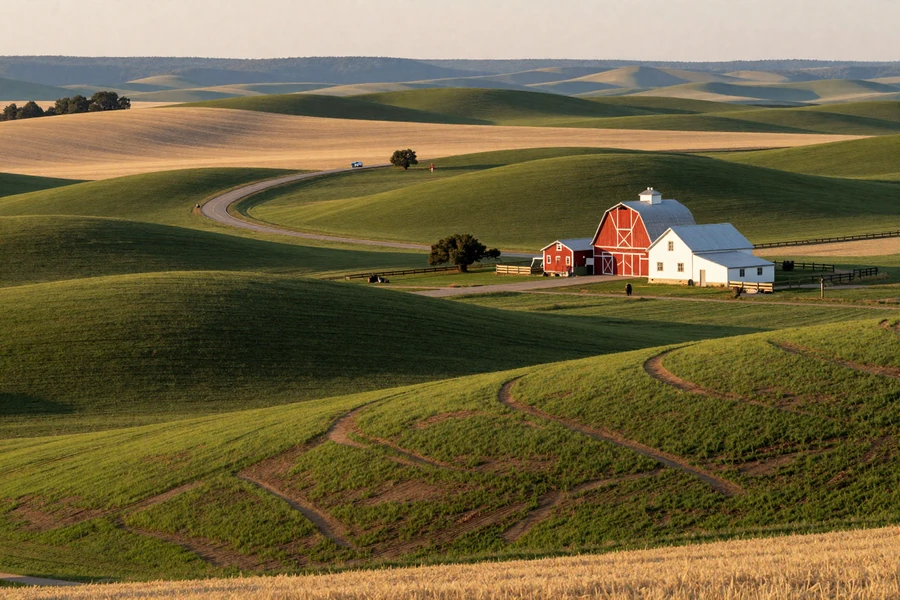
How to Date a Farmer
A plainspoken guide to farm rhythms, seasons, communication, and what really matters for lasting country love.
Read the article
Seasonal Dating Challenges
Planting, harvest, calving, winter loneliness - practical ways to love well through every season of the farm year.
Read the article
How to Spot Romance Scams
The scammer playbook aimed at seniors - red flags, penpal patterns, and how to report them quickly and safely.
Read the article