
What This Guide Covers
- How to know, in your own time, when you are ready to date again.
- Sitting with guilt and grief - and dating for the right reasons.
- Talking about your late spouse in a way that honors them and welcomes someone new.
- Four gentle steps for taking it slow after a long marriage.
- How to introduce a new partner to your adult children - and how to defend them.
- The 90-day check-in with yourself before things get more serious.
How to Know When You're Ready
There is no correct waiting period before a widow or widower dates again. Grieving is unique to each of us. Some folks feel ready in a few months, others in several years, and some choose never to date again - every one of those paths is honorable. Widower author Abel Keogh began dating about five months after his late wife passed, despite friends and family insisting it was too soon. He knew his own heart. You will know yours too.
The decision is yours. Not the church ladies' at coffee hour. Not the brother-in-law who means well. Not the adult daughter who is still raw with her own grief. You are the only one who can feel the quiet shift inside that says, I am ready to share a little bit of life again.
Quiet signs you may not be quite ready yet
According to Abel Keogh, three patterns suggest a widowed dater needs a little more time before committing to someone new. If you recognize yourself here, that is a kindness to notice - not a failure.
- You keep not inviting the person you're dating to family gatherings because your family is not ready to meet them.
- You introduce them in public as a "friend" even though the relationship is serious.
- You ask them to hide or step into another room when someone drops by unexpectedly.
If any of those feel familiar, pause. Give yourself more time. A good partner will understand. If they don't, that too is useful information.
Sitting With Guilt and Grief at the Same Table
Guilt is almost always part of the first few dates. Abel Keogh has written honestly that on his very first dinner out after his wife's death, he felt as if he were cheating - and kept glancing around the room for anyone who might recognize him. That feeling is not a sign you are doing something wrong. It is a sign you loved deeply, and love like that does not dissolve overnight.
Here is the quiet good news: the intensity does fade. For Keogh it took about five dates before the feeling fully subsided. For others it eases more gradually. If, however, the guilt does not diminish at all after several honest attempts, that is your own heart telling you to wait a little longer. Waiting is allowed.
"Dating will not fill the void of losing your spouse, and it will not heal the pain. What it can do is open your heart - enough to feel the quiet joy of falling in love again, in a different shape, later in life." - Adapted from Abel Keogh, widower and author
Loneliness and the simple wish for company are perfectly good reasons to date again - single people have always dated for those reasons. Just be honest with yourself about what dating can and cannot do. It is not a cure for grief. It is a doorway, held gently open.
Talking About Your Late Spouse the Right Way
It is okay to talk about your late husband or wife on a date. A kind, mature person will expect it and often want to hear. Your marriage is part of who you are; pretending it wasn't would be dishonest, and dishonesty is no way to begin something new.
But there is a balance, and Abel Keogh names it well: do not spend the entire date talking about your late spouse or about how wonderful the previous marriage was. Mentioned briefly and warmly, it signals a loving heart. Mentioned constantly, it signals a heart not quite ready yet. Your date will feel the difference either way.
A simple do / don't for the conversation
- Do share their first name, how long you were married, and one warm memory if asked.
- Do show real curiosity about your date's life, children, farm, and faith.
- Don't compare your date out loud to your late spouse - in cooking, looks, or temperament.
- Don't process unresolved grief during dinner. A date is not a therapist.
That last line matters. Abel Keogh puts it plainly: sixty dollars an hour spent on a professional grief counselor is far more useful than sixty dollars on dinner and a movie when what you really need is to be heard. If you notice yourself venting heavy sorrow to the person across the table, that is a sign to call a pastor, a counselor, or a trusted friend. Save the date for getting to know someone new.
Four Gentle Steps for Taking It Slow
After years - maybe decades - of shared marriage, the sudden absence of physical closeness is often the hardest loss. A hand on the shoulder. A warm body beside you at night. A kiss before chores. Missing that is natural, and it is also what Abel Keogh calls a "ticking time bomb" for widowed daters: the ache for intimacy can push folks into serious relationships before they are ready, and the result is more heartbreak.
So go slow. Make certain, when your heart commits, that you are choosing the person in front of you - not filling the shape of the one you lost. Here are four steps our members have found helpful.
-
01
Begin With Friendship
Coffee after church, a phone call on a Tuesday, a walk through the pasture. No pressure, no promises. Friendship is a sturdy foundation.
-
02
Let Three Seasons Pass
Before discussing anything permanent, try to see your companion through a busy season, a hard one, and a quiet one. Character shows in weather.
-
03
Keep Your Own Routines
Stay rooted in your church, your friends, your chores, your grandchildren. A healthy new chapter adds to your life - it does not replace it.
-
04
Trust the Slow Yes
A real yes tends to arrive quietly and stay. If the feeling is frantic or desperate, that is loneliness talking. Loneliness deserves patience, not a ring.
Farmers above all people know what is worth waiting for. Apply the same patience to your own heart.
Introducing a New Partner to Your Adult Children
Parenthood complicates dating after loss. Getting children on board with a new relationship can be tender work, which is another reason to take things slowly. Your children - even grown ones - should never feel the new partner is trying to replace their mother or father. Say so plainly, and say so early.
Tell them before rumors travel. Tell them gently, with care for their grief too. "Your daddy will always be your daddy. I am not looking for a replacement - I am looking for a companion for the road I still have." That sentence, spoken over Sunday dinner, has carried more than one of our members through a hard conversation.
And once you have introduced someone? Defend them. Abel Keogh is blunt about this, and he is right: family and friends sometimes mistreat a new partner through cold shoulders, pointed remarks, or constant references to the deceased in front of them. Address it privately but firmly with your loved ones. The same standards you once asked of them toward your late spouse apply to your new date. If you cannot stand up for the person you are dating, you are not quite ready to be dating them.
"My son-in-law made a cutting remark at Thanksgiving. Afterward I took him aside and said, 'He is a good man, and he is welcome at this table.' It wasn't easy. But it was necessary. They've gotten along ever since." - Eleanor, 71, widowed rancher, Montana
The 90-Day Check-In With Yourself
Here is a simple, honest tool from Abel Keogh's experience with widowed daters: if you have been dating someone for about 90 days and you are still uncomfortable with the basic parameters of the relationship, it is probably not going to get better. Plenty of good people have spent a year, two years, even five years telling themselves, "I'll get used to it" - only to wake up in the same spot, still uneasy.
A quiet 90-day check-in - just you and a cup of coffee
- Am I proud to introduce this person to my family and my church?
- Do I feel peaceful around them more often than I feel anxious?
- When I picture next year together, do I feel warmth - or dread?
- Am I being myself, or am I quietly shrinking to fit?
- Would my late spouse, who loved me well, recognize the me in this relationship?
If most answers are honest yeses, keep going - gently. If several are honest nos, have a kind, clear conversation. Ninety days is plenty of time to know.
Sharon's Story: Six Months After Loss
Sharon Walsh, age 53, of Canandaigua, New York, had no intention of dating six months after unexpectedly losing her husband. She feared another loss so deeply that the thought of opening her heart again felt like tempting fate. Through therapy, long walks, and honest contemplation, something softened. She went on a few quiet dates with a man she describes as "sweet, gentle, and understanding." None of them turned into a grand romance - yet.
What changed, Sharon says, is that she is "learning to stop imagining dire outcomes and to just let the future unfold." That is the whole invitation of this guide, really: not to rush, not to replace, not to force anything at all. Simply to let the future unfold, one kind evening at a time.
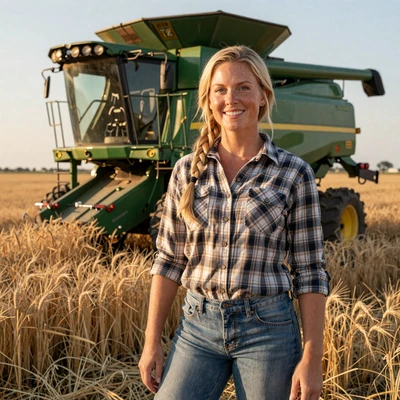
I am learning to stop imagining dire outcomes and to just let the future unfold. That has been enough, for now - and some days it has been plenty.
More Support for This Journey
Two companion reads our widowed members return to most often - gentle, honest, and written for country hearts like yours.
Dating After Loss for Farmers
A longer, quieter walk through grief, readiness, and the first coffee date - written especially for widowed farmers and ranchers.
Read the companion guide
Real Country Couple Success Stories
Meet rural couples who found love again in their 60s, 70s, and 80s - after loss, after waiting, after letting the future unfold.
Read their stories